
Since January 1, 2026, regulations surrounding disability and reintegration have undergone significant changes. At first glance, it appears to be a technical reform: new procedures, stricter rules, and additional obligations for employers. However, upon closer inspection, something else becomes apparent.
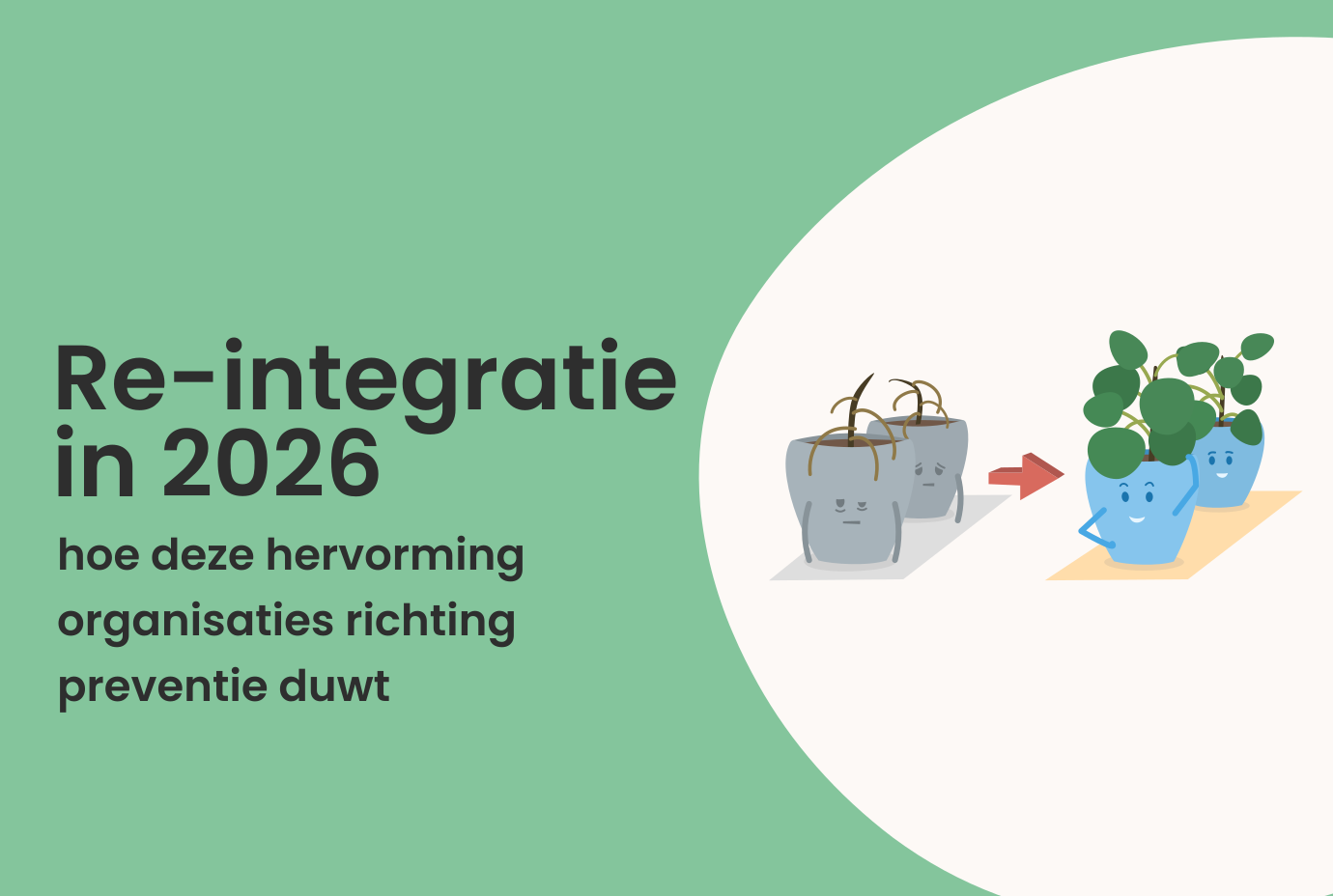
This reform is not merely an exercise in compliance. It explicitly invites organizations to rethink their approach to well-being, absenteeism, and reintegration, and to derive strategic advantage from it. The legislator is clearly steering towards prevention, early action, and shared responsibility.
Employers who implement these changes only minimally will experience additional pressure. Organizations that use them as leverage can evolve toward a more sustainable, people-oriented, and efficient policy. That is why we have listed five things that are changing and the opportunities they present.
1. Prevention becomes the new starting point
One of the strongest signals in the reform is the explicit focus on early action. Employees who are at risk of dropping out can formally request adjustments to their tasks or working hours, among other things, before they are effectively incapacitated for work (i.e., without a doctor's note).
That may seem like a subtle difference, but in reality it is a fundamental shift.
For organizations, this means an opportunity to:
- less reactive in responding to signals
- respond more quickly to mental or physical complaints
- addressing problems before they escalate into prolonged downtime
Prevention thus becomes not only a welfare issue, but a structural component of good employment practices. Those who commit to this today will not be left behind tomorrow.
2. A stricter framework for illness requires greater clarity
The reform also tightens the framework surrounding illness and guaranteed wages for employees:
- fewer days without a medical certificate
- stricter rules for repeat offenses
- more limited rights in the event of a gradual return to work
This increases the need for clarity, both for employees and for HR. Organizations that invest in clear procedures, transparent communication, and consistent follow-up create an important advantage here. Not by being stricter, but by acting predictably and correctly. Clarity reduces tension. And tension is often an underestimated factor in long-term absenteeism.
3. Financial incentives make prevention concrete
The reform also changes the financial picture. The traditional accountability contribution will disappear, but will be replaced by a solidarity contribution for larger employers when employees become incapacitated for work.
In short, for companies with an average of 50 employees or more, the following applies:
From now on, the employer will pay 30% of the primary disability benefits.
which an employee receives during month 2 and month 3 of incapacity for work.
This is in addition to the guaranteed wage for the first month and applies per employee, per period of absence.
Concrete example:
Suppose that an employee receives a total of €3,200 in benefits from the health insurance fund during months 2 and 3. In that case, the employer pays: 30% × €3,200 = €960 solidarity contribution.
This cost is collected later via the Social Security Administration, but it is very real. The message is clear: the cost of long-term absenteeism is becoming tangible.
At the same time, this creates a clear incentive:
- Every avoided failure means lower costs.
- every early intervention counts
- Investing in mental well-being makes sense not only from a human perspective, but also from an economic one.
Prevention is thus shifting from a "soft value" to a rational strategy. Not as a cost-saving measure, but as an investment in continuity.
4. Active absence policy: mandatory, but guiding
Starting in 2026, an active absence policy will be mandatory. Employers must record who maintains contact with employees who are unable to work, how often, and for what purpose.
Important: this contact is intended to facilitate return, not to monitor.
Organizations that take a smart approach to this use this obligation as a guiding tool:
- to maintain connection during absence
- to lower barriers to reintegration
- to build trust instead of mistrust
The difference lies not in the rule, but in the intention behind it.
5. Reintegration is becoming faster, stricter, and more sensitive
The reform accelerates and tightens reintegration obligations:
- assessment of work potential after 8 weeks
- faster start-up of projects
- clear consequences for non-cooperation
This increases the pressure on employees and HR, which is precisely why guidance is crucial. Reintegration only works when people feel supported, are given perspective, and regain control of their situation. Without this people-centered approach, speed can quickly become counterproductive. Successful reintegration is more than just an administrative process.
What this reform specifically requires from organizations
This reform requires clear action:
- adjustment of work regulations
- clear procedures regarding illness and contact
- clear internal roles (who does what, and why)
- an explicit vision on prevention and mental well-being
But at the same time, it offers something valuable: a framework that helps organizations tackle absenteeism structurally, rather than reacting again and again when it is already too late. We see this reform not only as a tightening of the rules, but as a signpost: organizations that focus on prevention win in all areas.
By taking early warning signs seriously, providing accessible support to employees, and taking a people-centered approach to reintegration, employers not only build compliance, but also sustainable, workable work.
Would you like to explore how prevention can contribute to reducing absenteeism and facilitating reintegration? BloomUp is specifically tailored to Belgian legislation on psychosocial risks and supports HR teams in taking a structural approach to prevention, early detection, and follow-up. We would be happy to discuss this with you:
.png)
.png)
.png)