
.png)
We brought together HR professionals and well-being managers in the heart of Antwerp for our Impact in Wellbeing event. An afternoon centered around one key question: how can you make the impact of mental well-being tangible and measurable? Three sessions, three perspectives, and plenty of discussion among organizations. You’ll find the key insights below.
Return on Prevention: What Prevention Really Delivers
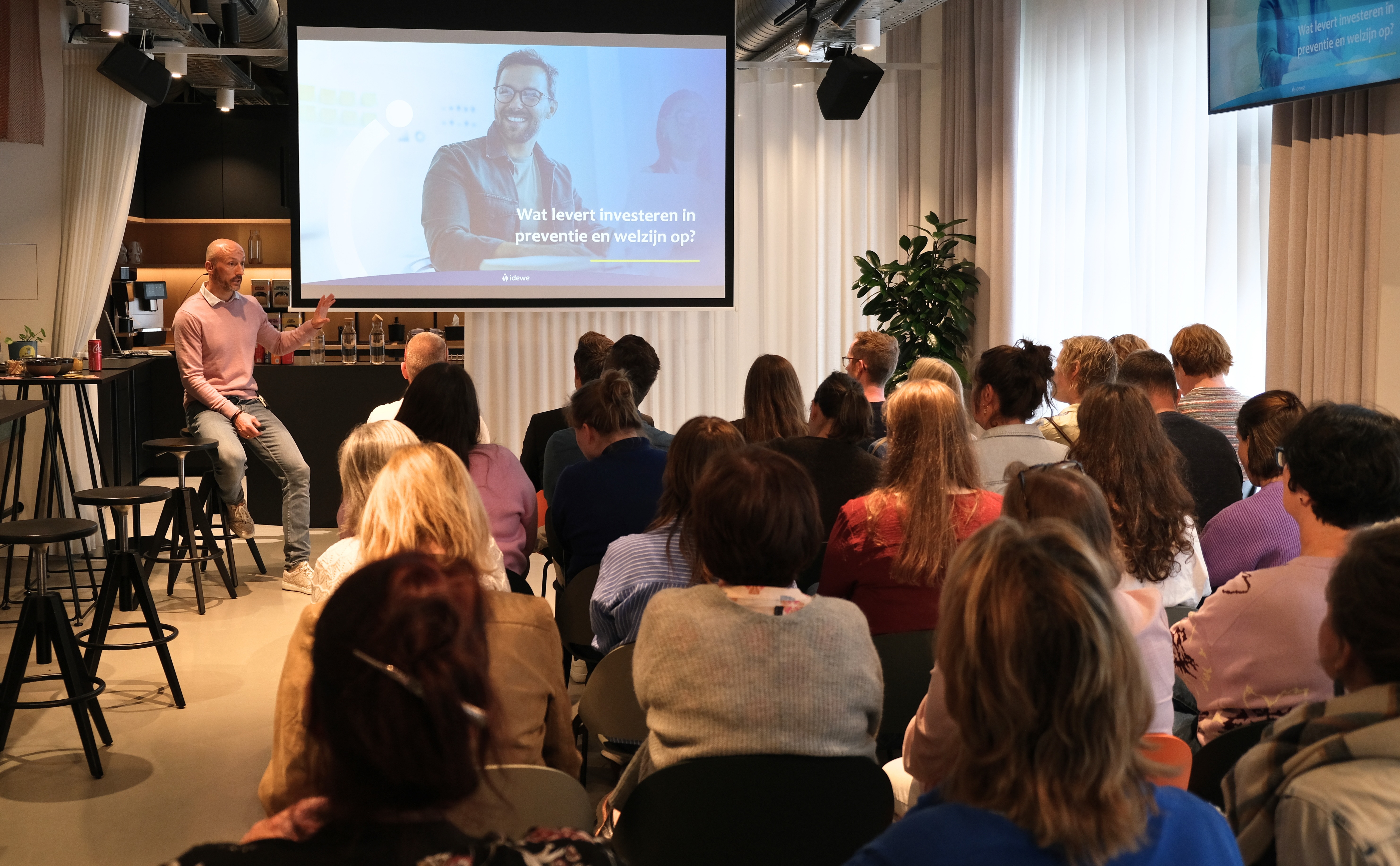
David Verwimp of IDEWE presented figures on the return on investment in well-being. The key message: doing nothing costs a fortune, and even small investments yield demonstrable results.
Based on a survey of 37 Belgian employers, IDEWE has identified clear links between investments in employee well-being and engagement and absenteeism. Employers who invest in psychosocial support score higher on satisfaction, engagement, and retention, and experience lower absenteeism. An investment of around €100 per person per year already makes a measurable difference. Ergonomics also yields tangible results: musculoskeletal complaints can easily cost organizations thousands of euros per employee per year in healthcare and absenteeism costs. At one retail client, approximately €1.6 million in avoidable costs were saved over eight years by consistently investing in ergonomic policies.
The message for HR: metrics make well-being a topic of discussion at the executive table, and that starts with measurement.
Read the white paper on the studies here.
Panel Discussion: What Works in Practice
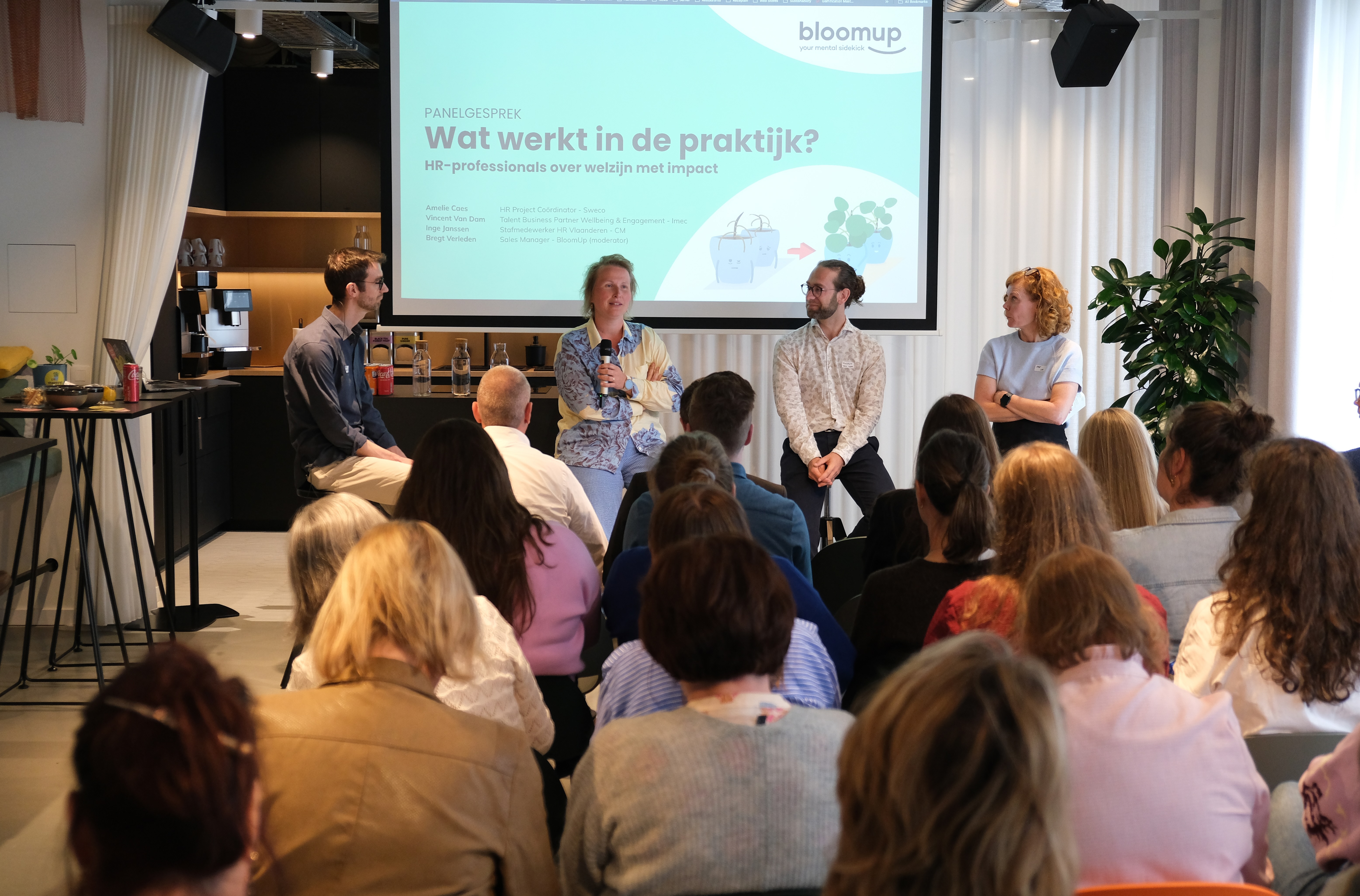
In a panel discussion on workplace well-being, Inge Janssen (HR Staff Member, CM Flanders), Vincent Van Dam (Talent Business Partner, Well-being & Engagement, Imec), and Amelie Caes (HR Project Coordinator, Sweco) shared how they approach well-being policies within their organizations.
While the specific details may vary, four common recommendations emerged for HR teams looking to address employee well-being.
Four recommendations
Work with focus. No more than two or three themes per year. It’s better to focus on quality and stay focused than to spread yourself too thin and end up with half-hearted efforts that get a little attention here and there.
Establish a clear framework. Take the time to create a structured approach, a well-founded model, and clearly defined responsibilities. Adopt a tiered approach: crisis intervention for those in immediate need, support for the “middle group,” and opportunities for growth for those who are already doing well.
Listen to your employees. Well-being initiatives only work if they align with your team’s needs. Actively seek their feedback before making decisions, and involve them in the initiatives you roll out.
Work to secure buy-in from management. Well-being must be a strategic priority, not just a nice-to-have. This requires ownership at the highest possible level within the organization.
Workshop: Measuring Well-Being That Matters
Following the substantive session, HR professionals from various organizations got to work themselves. The focus remained closely aligned with the masterclass’s central message: defining challenges, setting measurable goals, and determining how to effectively measure potential impact.
In smaller groups, there was lively discussion about which KPIs are relevant to their specific context, which solutions prove to be feasible, and how to measure impact in concrete terms without having to wait for five-year surveys. It became clear that solutions which seem obvious in one organization may not quite work in another.
Many participants also took away practical approaches from colleagues who are facing the same challenges.


Would you like to use the workshop materials yourself? Send your request here and we’ll send them to you.
What's next?
Are you finding it difficult to demonstrate the impact of your wellness policy to senior management? We’d be happy to work with you to develop an approach that combines data with human support. Schedule a meeting using the button below.
.png)
.png)
.png)