



Why privacy decides whether your wellbeing offering gets used
"Will what I share end up with my employer?" As long as that question goes unanswered, help stays out of sight. Trust is missing, and without trust hardly anyone takes the first step.
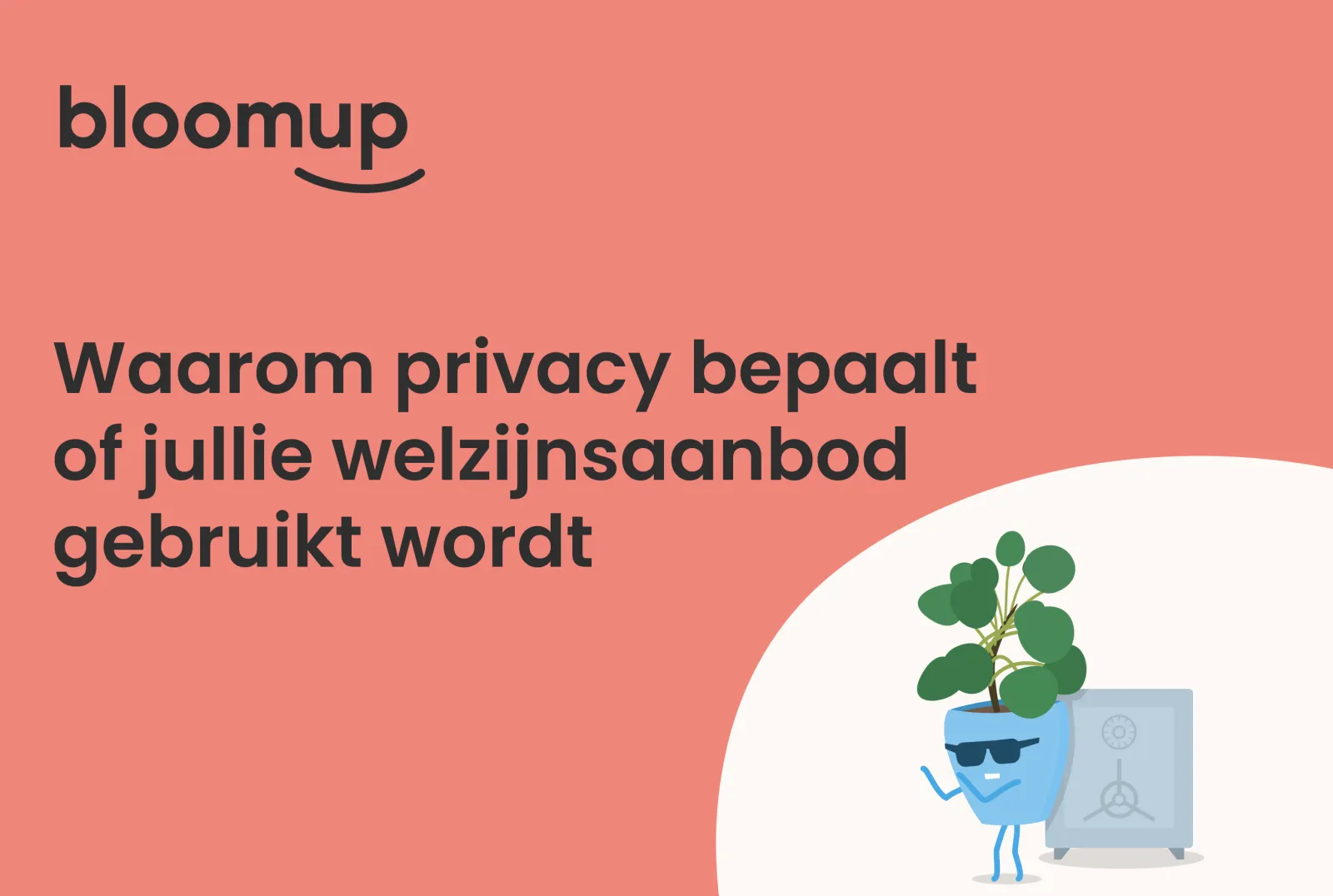
An employer can buy the best wellbeing offering in the world. If employees do not trust it, it goes unused.
That sounds obvious, but it is often underestimated. When an organization offers psychological support, employees almost always have the same unspoken question: "Will what I share end up with my employer?" As long as that question goes unanswered, help stays out of sight. Trust is missing, and without trust almost nobody takes the first step.
We see this in our figures too: almost half of our users would not have sought help without BloomUp. That says something about how high the threshold normally is, and how much difference it makes to remove it.
That is why we do not treat privacy as a legal chapter tacked on at the end. It is the condition that lets someone feel safe enough to start.
How we protect your privacy in practice
We keep it simple and verifiable.
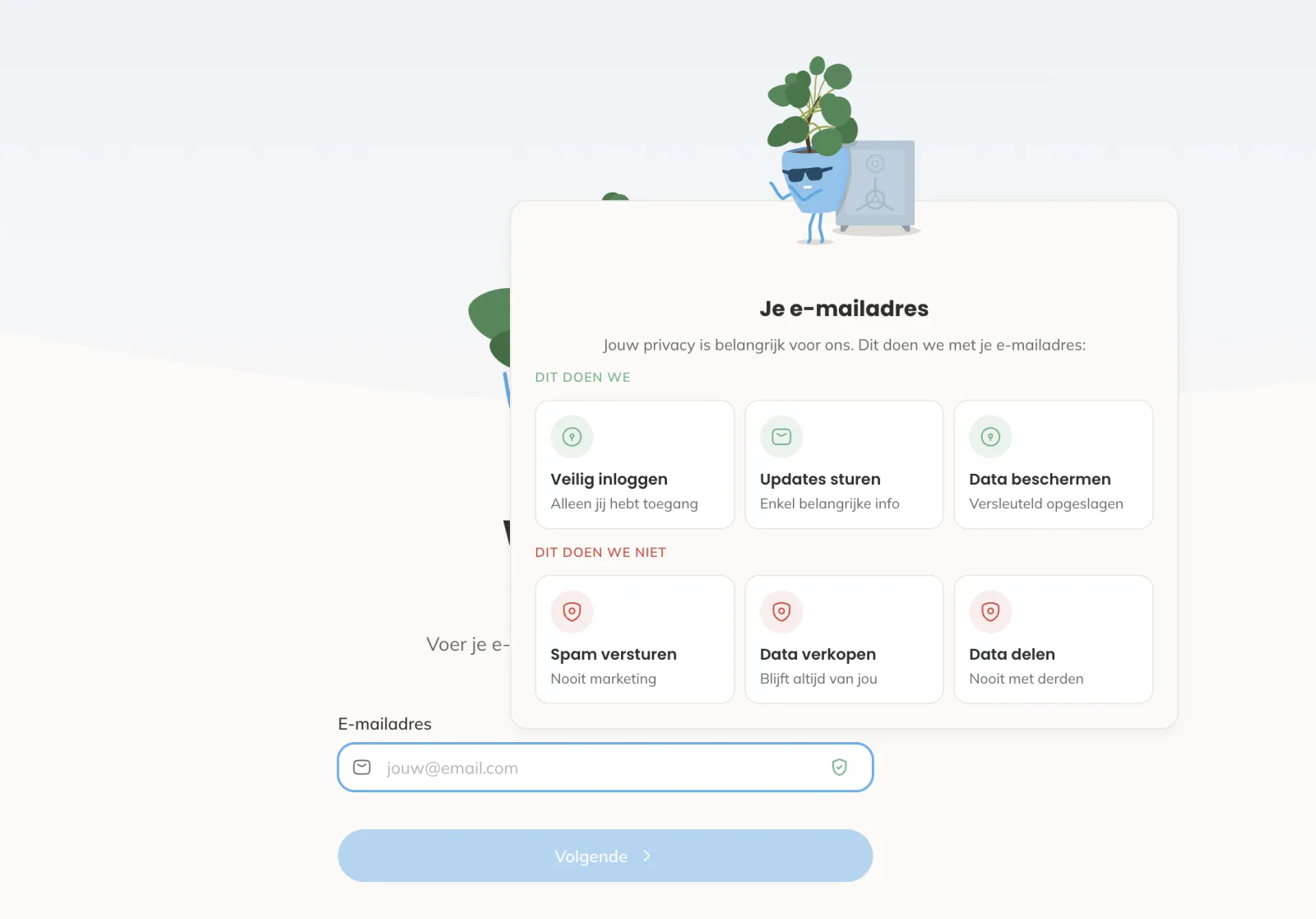
- Your data stays yours. We do not sell or rent it to anyone.
- No social tracking. Facebook, Google or LinkedIn will not find out that you use BloomUp.
- No recordings. A conversation with your psychologist is not recorded, not even to evaluate quality.
- No longer than necessary. If you have not been active for a year and a half, we delete your data.
- For each piece of data they enter, employees can clearly see what it is for and what we do with it.
- It stays between you and your professional. We do not share any content from the conversations with your employer, insurer or health fund.
Below are a few examples of what this looks like:
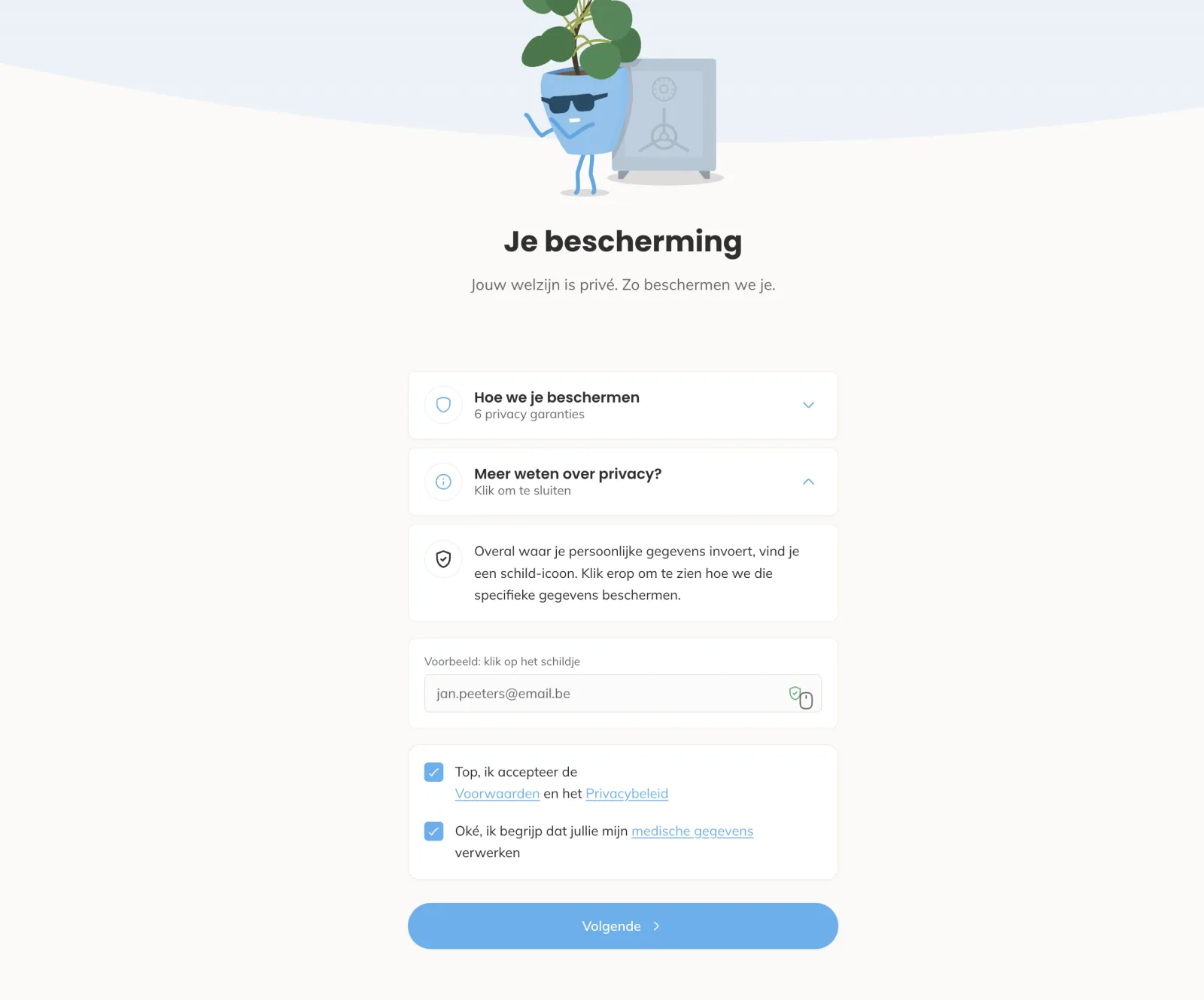
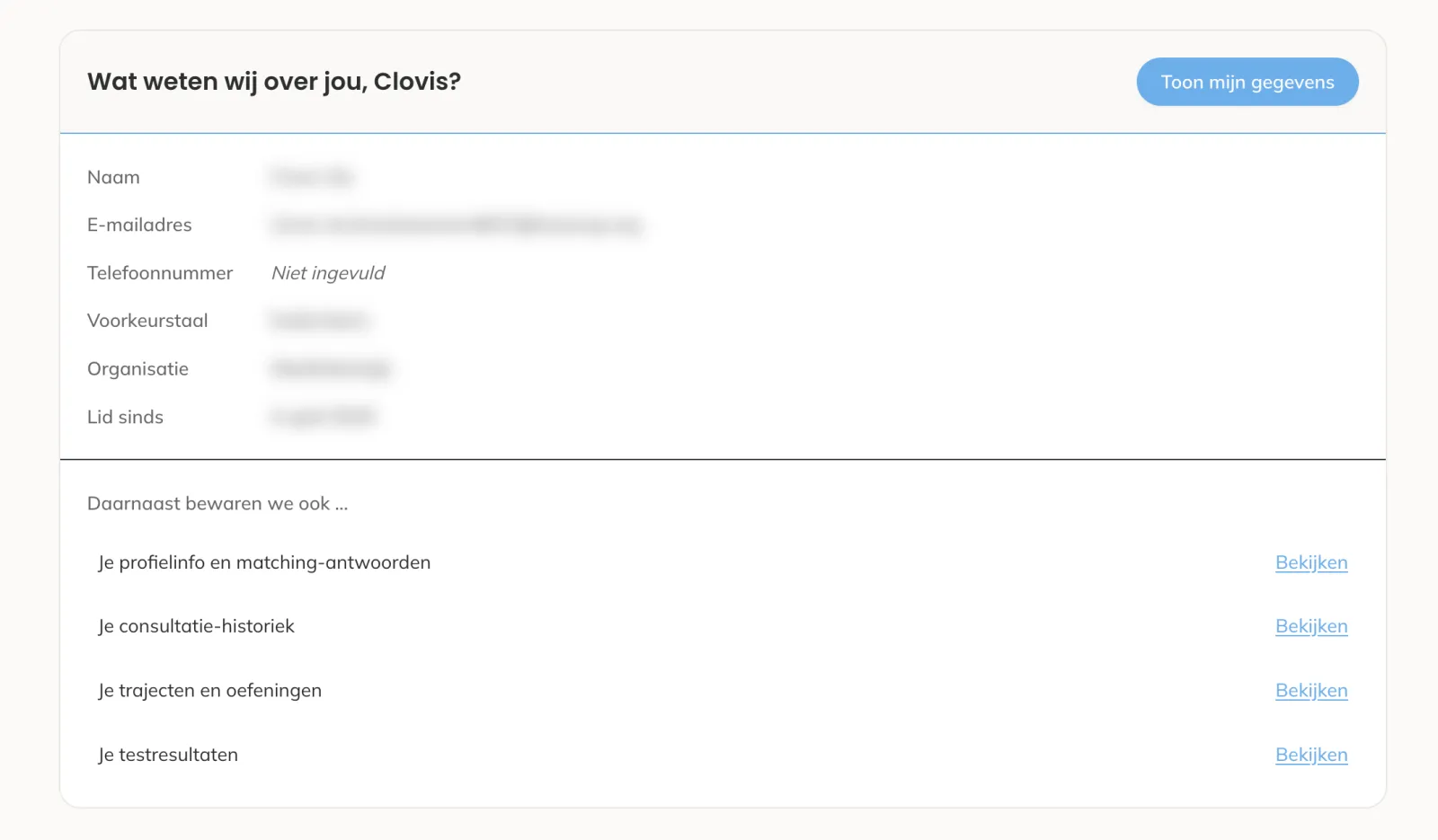
Where is your data stored?
There is a question that sometimes comes up when buying a wellbeing platform: where is the data actually stored? Many platforms run on the big, often American, cloud providers. Technically there is little wrong with that, but it does determine which legislation can apply to your data.
Our data is stored in Europe, with the European cloud provider Scaleway. That makes us one of the few wellbeing platforms or EAPs (Employee Assistance Programmes) that run entirely on a European cloud. For sensitive data such as information about someone's mental wellbeing, we do not consider that a detail. It determines which legal framework your data falls under (such as the GDPR), and who could in theory request access to it.
Why this matters for you as an employee
Privacy is not a formality here. It is what allows you to be honest. A conversation with a psychologist or coach only works if you can say what is really going on. If somewhere in the back of your mind you are unsure who is listening in or where it ends up, you keep things to yourself. And those are exactly the things you need to move forward.
Knowing that it stays between you and your professional means you can really use the help, without holding anything back. That is the difference between a conversation that stays on the surface and a conversation that changes something.
Why this matters for HR
For HR, privacy is more than a box to tick. It determines whether the investment actually gets used.
You can roll out the strongest platform, but if employees fear that it leaks to the employer, to social platforms or to an American cloud platform, usage stays low. An offering that nobody dares to open has no effect on absenteeism or retention. At that point it is mainly a cost.
That is exactly why this is a strong argument towards employees. Because we do not share content or pass on anything traceable, you as HR can honestly say that you get to see nothing. That certainty removes the biggest barrier. And once that barrier is gone, an offering comes to life and you see it in the figures.
Do you want to be able to assess this for every partner?
These are the questions that deserve a clear answer:
Where is the data physically stored, and which legislation does it fall under?
(Is the cloud hosting company's head office located in Europe, even if the data centre is in Europe?)
Does the employer get to see any content, or only anonymous figures?
Are conversations recorded, and if so, why?
How long is data kept?
Is there tracking through social media pixels?
Does the employee have to give separate consent for medical data, apart from the general terms and conditions?
Frequently asked questions about privacy at BloomUp
Does my employer see what I discuss with my psychologist?
No. We do not share any content from the conversations. At most, your employer receives anonymized usage figures, never anything that can be traced back to a person.
Where is my data stored?
In Europe, with the European cloud provider Scaleway. This means your data falls under European legislation (GDPR).
Are my conversations recorded?
No. A conversation with your psychologist is not recorded, not even to evaluate quality.
How long does BloomUp keep my data?
No longer than necessary. If you have not been active for a year and a half, we delete your data.
Does BloomUp sell my data?
Never. Your data stays yours and we do not sell or rent it to anyone.
So what information does my employer get?
Only anonymized figures on how much the offering is used. For medical data, we also ask for your consent separately, apart from the general terms and conditions.
Finally
You recognize a good wellbeing partner by how carefully they treat the people behind the figures, as well as by what they offer. The answers to these questions tell you a lot about that.
Want to see how we approach it? You can read our full privacy statement here, and we are happy to explain it in a conversation.
Written by:
Benjamin Bergers